
When we think about off-grid power, we immediately or usually think of solar panels. Solar has become the standard recommendation for homesteads and remote properties because it is relatively simple to install and works almost anywhere with decent sunlight. But after spending time reading through real off-grid forums, watching long-term homestead projects, and talking to people actually living with these systems, another question comes up surprisingly often:
If flowing water is available, is micro hydro actually better than solar?
In many situations, the answer is yes. A properly designed micro hydro system can produce more consistent electricity than solar and require a smaller battery bank. Some off-grid homeowners describe hydro as the closest thing to set-and-forget renewable energy once it is dialed in correctly.
At the same time, there is a reason solar dominates the off-grid world while hydro remains relatively rare. Water power sounds simple in theory (actually,, that was a lie, it does not sound simple at all), but real-world conditions introduce complications that many people underestimate.
The reality is that both systems solve different problems, and the best option depends more on the property itself than the technology.
What Is Micro Hydro Power?
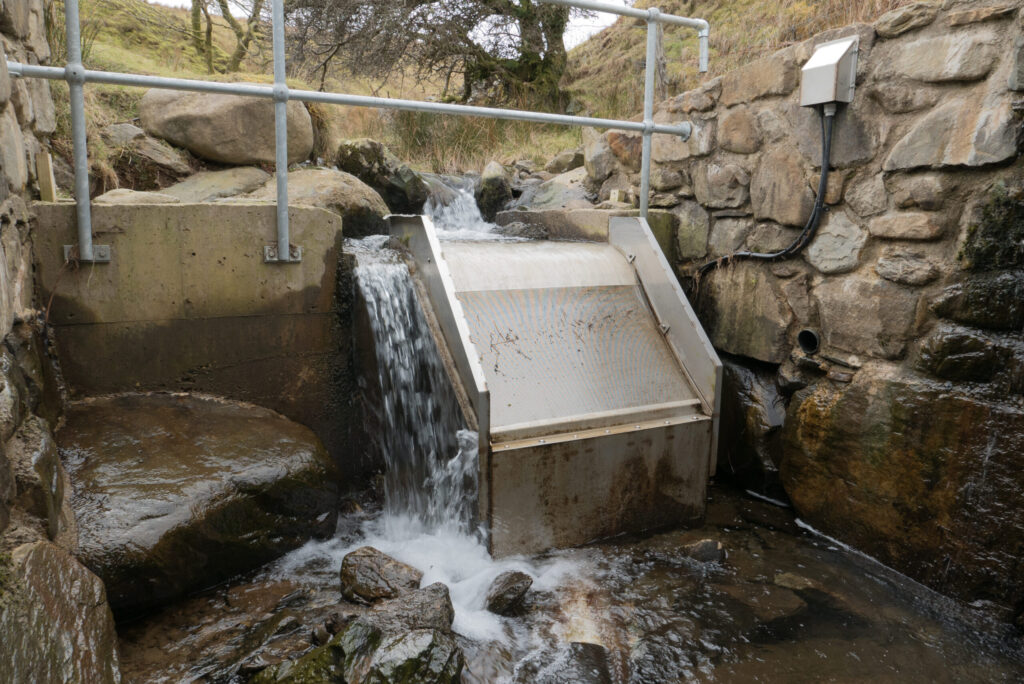
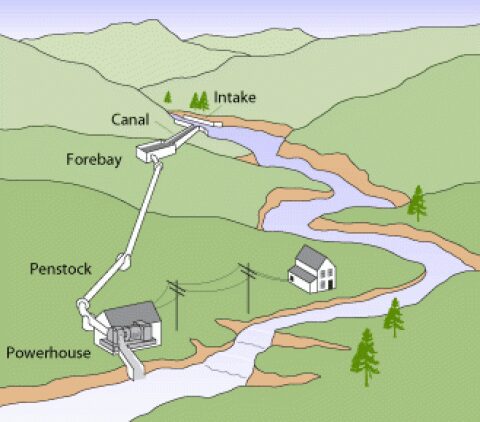
Micro hydro is a small-scale hydroelectric system that generates electricity from moving water. Most systems use a stream or creek that flows downhill through a pipe toward a turbine. As the water spins the turbine, electricity is produced continuously.
What makes hydro different from solar is consistency. Solar panels only generate electricity when sunlight is available, but hydro can produce power twenty-four hours a day if water flow remains stable.
That continuous production is important if you have systems that need consistent electricity. You will have a system you can depend on 24hrs 7 days a week.
A small hydro turbine producing 300 watts continuously can generate:
300 W×24 h=7200 Wh/day
That equals roughly 7.2 kilowatt-hours per day, which is enough to cover refrigeration, lighting, internet equipment, pumps, and many household essentials.
For comparison, a 300-watt solar panel may only produce useful energy for four to six hours depending on weather and season.
I remember my previous neighbour used to say this all the time, constant power beats peak power.
Why Some Homesteaders Prefer Hydro Over Solar
The biggest advantage of hydro is reliability. A stream does not stop flowing at sunset, and unlike solar panels, hydro systems are less affected by cloudy weather.
This matters most during winter. Many off-grid solar setups struggle during long stretches of storms or short daylight hours. During this time you always have anxiety, and you will be restrictive about what will be turned on or off. l don’t know about you, but this sucks. I still use solar, and this is the one thing I hate about solar.
A good hydro system can reduce many of those problems because energy continues to be generated overnight.
Another major advantage is battery reduction. Since hydro systems produce electricity continuously, users often rely less heavily on large battery storage systems. That can reduce overall system costs over time because batteries are usually one of the most expensive components of an off-grid setup.
Some homesteaders also prefer hydro because it feels more stable and predictable once installed correctly. Solar production changes every day. Creek flow, although seasonal, can sometimes remain surprisingly steady.
According to the U.S. Department of Energy, small hydropower systems are among the most energy-efficient renewable energy technologies currently available for remote power generation.
Why Don’t More Homesteads Use Hydro Power?
If hydro works so well, why do so few off-grid properties use it?
The answer is mostly geographical.
Most land simply does not have the right conditions for effective hydro generation. A property needs more than a creek or stream. It also needs sufficient water flow and enough elevation drop, often called head, to generate meaningful electricity.
Some people’s streams are powerful during spring but are much weaker during late summer. Others find that seasonal droughts or freezing temperatures make hydro unreliable for several months of the year.
Solar became popular partly because it is far more universal. Nearly any property with decent sun exposure can use solar panels. Installation has also become easier and cheaper over the last decade.
Another factor is maintenance. Solar systems are relatively passive. Once mounted properly, they often require very little attention outside of occasional cleaning and battery monitoring.
Hydro systems are different because moving water always comes with ongoing wear and maintenance. Intake pipes will obviously clog with debris at some point, sediment builds up, and also storms can be a huge issue because it can damage infrastructure.
This is one reason many experienced homesteaders still choose solar even when hydro is technically possible.
How Expensive Is a Real Off-Grid Hydro Setup?
One reason micro hydro remains uncommon in off-grid communities is the upfront cost. People often hear that hydro is cheap once installed, which can be true over the long term, but the initial setup is rarely simple or inexpensive.
The total cost depends heavily on the property itself. Two homesteads using similar turbines can end up with completely different installation costs because terrain, water flow, distance, accessibility and a whole bunch of reasons.
A very small DIY system powering lights and basic electronics might cost only a few thousand dollars. But a serious whole-house setup capable of running refrigeration, tools, pumps, internet equipment, and appliances can easily reach the same price range as a full solar installation.
For many real-world systems, costs usually come from four major areas:
- the turbine and generator
- piping and water intake infrastructure
- batteries and inverter equipment
- labor, trenching, and maintenance materials
The turbine itself is often not the most expensive part. Long pipe runs can quickly increase costs, especially on properties where the water source is far from the home. High-quality penstock pipe is expensive, and steep or rocky terrain can make installation much harder.
Battery costs may also surprise people. Although hydro systems usually need smaller battery banks than solar, most off-grid homes still require some energy storage for stability and backup protection.
According to information published by the U.S. Department of Energy, small micro hydro systems can range anywhere from a few thousand dollars to tens of thousands depending on system size and site complexity.
A common misconception is that hydro automatically replaces solar entirely. In reality, many experienced off-grid homeowners still maintain backup solar panels or generators because creek conditions change seasonally.
One homesteader in Washington State documented spending nearly as much on trenching and water line protection as the turbine itself. Winter freezing conditions forced additional insulation work that was not included in the original budget.
Another hidden expense is maintenance over time. Unlike solar panels, hydro systems contain moving parts exposed continuously to water, sediment, and debris. Bearings wear out, intake systems clog, and pipes occasionally need repairs after storms or freezing weather.
This does not necessarily make hydro a bad investment. In some locations, hydro can provide far more consistent energy than solar while reducing generator fuel costs significantly. Over several years, that reliability may offset some upfront expenses.
However, hydro tends to reward properties with naturally favorable conditions. If the stream is close, flow is stable year-round, and elevation drop is strong, installation becomes much more practical financially.
For people without those advantages, solar is often cheaper and easier overall.
The most important thing is to avoid comparing systems based only on equipment prices. A hydro turbine might appear affordable online, but the real cost comes from adapting the entire property around water delivery, protection, and maintenance.
That is why experienced off-grid builders usually recommend evaluating the land first before deciding on hydro. The property determines whether the investment makes sense.
Micro Hydro vs Solar: A Practical Comparison
| Feature | Micro Hydro | Solar |
|---|---|---|
| Energy Production | Continuous | Daytime only |
| Reliability | Excellent if water flow is stable | Weather dependent |
| Maintenance | Moderate to high | Low |
| Installation Complexity | Higher | Moderate |
| Seasonal Challenges | Drought and freezing | Winter sunlight reduction |
| Battery Dependence | Lower | Higher |
| Property Requirements | Specific terrain and water access | Works in most locations |
| Scalability | Harder to expand | Easier to expand |
In ideal conditions, hydro often produces more usable energy overall. But solar remains easier for most people to install and manage long term.
So, Is Micro Hydro Better Than Solar?
For the right property, micro hydro can absolutely outperform solar in consistency and total daily energy production.
But hydro is highly dependent on geography, water reliability, and maintenance tolerance. Solar became the dominant off-grid solution because it works reasonably well for almost everyone.
In practice, many experienced homesteaders see hydro as a specialized advantage rather than a universal solution.
If your property has:
- reliable year-round water flow
- good elevation drop
- manageable winter conditions
then hydro may be one of the best renewable energy options available.
If not, solar is usually the safer and simpler long-term investment.
Final Thoughts
Micro hydro power deserves more attention in off-grid discussions because it solves some of the biggest weaknesses of solar, especially consistency and nighttime generation.
At the same time, hydro is not maintenance-free and not every creek can realistically support a reliable system. Many online discussions simplify the process too much and ignore the practical challenges that appear after months or years of operation.
The best off-grid systems are usually designed around the land itself rather than trends or online recommendations.
If you are planning an off-grid setup, spend time studying your property carefully before investing in equipment. Water flow measurements, seasonal changes, and terrain matter far more than claims.
For many people, solar will remain the most practical option. But for the small percentage of homesteads with the right water resources, micro hydro can be incredibly effective.
Sources and Further Reading
- U.S. Department of Energy — Small Hydropower Basics
- National Renewable Energy Laboratory — Renewable Energy Research
- Energy.gov — Off-grid energy system guidance
Join the Discussion
Would you trust your off-grid setup to creek power, or would you stick with solar?
Leave a comment below with your experience, setup, or questions. Real-world feedback helps everyone make better decisions.
If you enjoy practical homesteading breakdowns and off-grid discussions, subscribe to Homesteading Projects for more articles based on real systems, real tradeoffs, and real experiences from the community.
Leave a Reply